
Plastic Parts Manufacturing – Modern, Lightweight, and Durable Solutions for Industry and Machinery
Plastic parts manufacturing is one of the fastest-growing industrial sectors, as plastics offer versatile properties that allow their use in a wide range of technical, industrial, and household systems. Thanks to their low weight, strength, chemical resistance, design flexibility, and cost-effective production, plastic components have become indispensable in the automotive industry, agriculture, hydraulics, pneumatics, electrical engineering, the food industry, and many other sectors.
Companies that specialize in rubber hoses and technical rubber often also manufacture plastic parts, as these components complement each other within various systems — from hose connections to protective covers, housings, and structural elements.
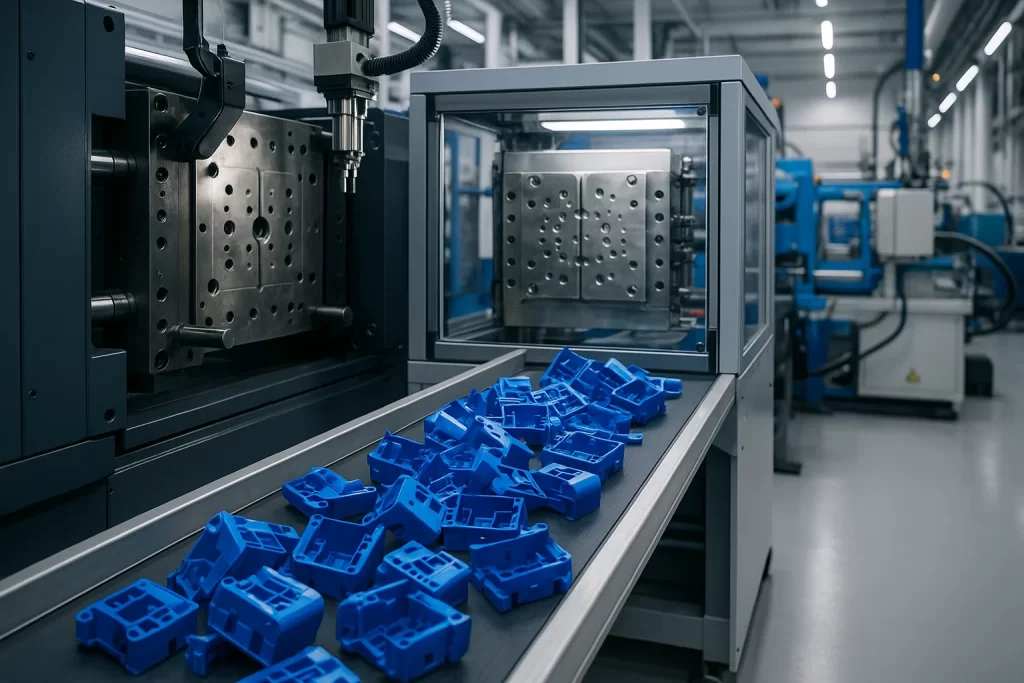
Properties of Plastic Parts
Plastic can be engineered to meet very specific requirements. By using different polymers and additives, it is possible to manufacture components that are highly durable, extremely lightweight, elastic, or heat-resistant.
Key properties:
Lightweight – plastic significantly reduces the overall weight of structures.
Corrosion resistance – does not oxidize or rot, making it suitable for humid or aggressive environments.
Chemical resistance – many plastics are resistant to oils, greases, acids, alkalis, and solvents.
Excellent moldability – allows the production of components with complex geometries.
Mechanical strength – modern polymers withstand loads, impacts, and vibration.
Low maintenance – plastic components require minimal upkeep.
Due to these properties, plastic is one of the most cost-effective and versatile materials in modern manufacturing.
Applications of Plastic Parts
Plastic components are used in virtually all industrial sectors:
Agricultural machinery – brackets, housings, protective elements, connectors.
Automotive industry – panels, covers, control components, air supply systems.
Hydraulic and pneumatic systems – connectors, plugs, fastening elements.
Electrical engineering – insulating parts, enclosures, protective housings.
Food and pharmaceutical industries – hygienic components suitable for contact with products.
Industrial production lines – guides, spacers, rollers, and structural elements.
Rubber hose systems – fittings, hose protection sleeves, holders, plugs, and other components.
Plastic enables the production of both single prototype parts and large-scale manufacturing series, making it highly valued by small companies and large industrial corporations alike.
Why Choose Professional Plastic Parts Manufacturing?
Precision – components manufactured according to drawings, 3D models, or custom orders.
High quality – reliable raw materials and modern production technologies are used.
Customization – parts can be tailored to specific dimensions, shapes, and properties.
Cost efficiency – lower production costs compared to metal components.
Fast production process – molding, injection, or machining ensures quick results.
Professional plastic parts manufacturing allows companies to obtain components precisely matched to their needs, ensuring smooth equipment operation, durability, and safety. High-quality plastic components are a key part of modern technological processes and help create efficient and reliable technical solutions.