
Composite hoses – a lightweight, flexible, and highly resistant solution for industry and the chemical sector
Composite hoses are a modern and advanced solution designed for the transfer of aggressive, hazardous, or sensitive liquids and gases. Unlike traditional rubber hoses, composite hoses are manufactured from multiple layers of specialized plastics, textiles, synthetic fibers, and protective materials, which together form a strong, flexible, and highly leak-tight product. These hoses are indispensable in the chemical, oil and gas, pharmaceutical, transportation, logistics, food processing, and industrial sectors, where the highest level of safety is required.
Composite hoses are especially valued for their resistance to chemical substances, flammable liquids, and environmental influences. They are used in applications where conventional rubber hoses would not withstand aggressive media or extreme operating conditions.
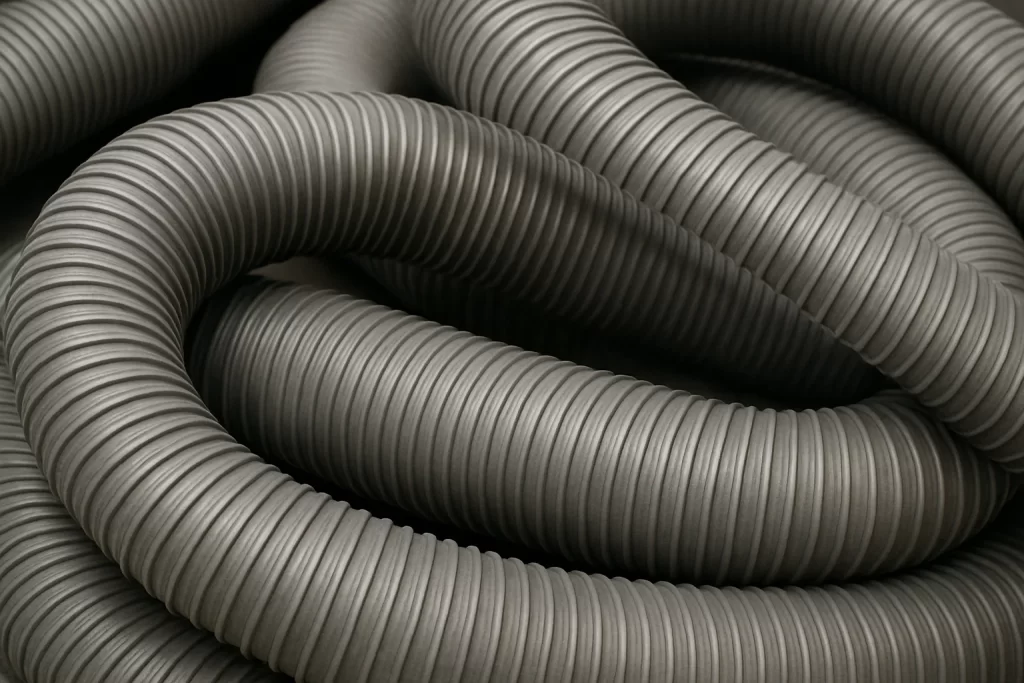
Construction and properties
A composite hose is manufactured from multiple layers that reinforce each other’s properties. The inner layers, made from specialized plastics, ensure resistance to the conveyed media – acids, alkalis, solvents, petroleum products, gases, or even industrial waste. These layers prevent liquids or vapors from penetrating the hose structure.
Intermediate textile and synthetic layers provide strength and pressure resistance. They also increase flexibility, making composite hoses significantly lighter and more maneuverable than metal or rubber alternatives.
The outer protective layer is resistant to UV radiation, mechanical damage, temperature fluctuations, oils, and chemical contaminants. This allows the hose to be used both indoors and outdoors, even in demanding industrial processes.
Some composite hoses include an antistatic layer, which protects against electrostatic discharge and provides additional safety when handling flammable materials.
Applications
Composite hoses are used wherever the highest level of safety and resistance is required. Their most common applications include:
Transportation of hazardous chemicals
Transfer of petroleum products, flammable liquids, and gases
Loading and unloading of tankers, road tankers, and storage tanks
Pharmaceutical and biotechnology industries
Transfer of volatile liquids and solvents
Water treatment and industrial waste systems
Food industry, where exceptional hygiene and safety are required
Industrial processes involving aggressive substances
Composite hoses stand out for their ability to handle a very wide range of media, making them an extremely versatile solution.
Why choose a composite hose?
Key advantages of composite hoses include:
Maximum chemical resistance – suitable even for highly aggressive media
Lightweight and flexible – easy to handle and install, even in confined spaces
Resistance to pressure and temperature – safe operation in both cold and hot conditions
Leak-tightness – multilayer construction ensures a high level of sealing
Antistatic properties – reduced risk of explosion
Long service life – resistance to UV radiation and environmental influences ensures durability
Composite hoses are an ideal choice for companies working with challenging media and strict safety requirements. They provide greater functionality, flexibility, and reliability than traditional hose alternatives.