
Technical Rubber – a Versatile and Reliable Material for Industry, Agriculture, and Machinery
Technical rubber is one of the most important materials in modern industry, agriculture, transport, and mechanical engineering. It is characterized by resistance to abrasion, flexibility, elasticity, durability, and the ability to withstand demanding operating conditions such as pressure, temperature fluctuations, vibration, and chemical exposure. Due to its versatility, technical rubber is used in the production of rubber hoses, gaskets, mats, shock absorbers, protective coatings, and various industrial components.
It is a material that not only protects equipment and extends its service life, but also ensures smooth and safe operation across a wide range of technological systems.
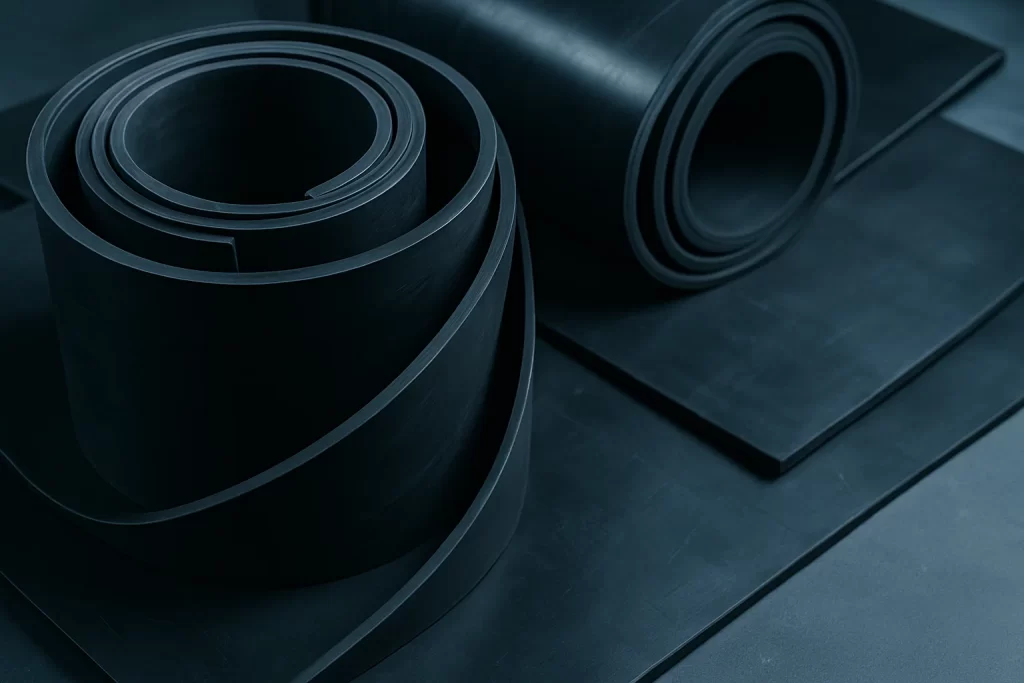
Properties of Technical Rubber
Technical rubber is manufactured from natural or synthetic rubber compounds selected according to a specific application. It can be extremely soft and elastic or hard and highly abrasion-resistant, depending on the area of use.
Key properties:
Resistance to mechanical damage – rubber does not tear or crack and withstands high pressure and friction.
Flexibility – retains its shape even at low temperatures or under frequent bending.
Chemical resistance – special rubber types are resistant to oils, acids, alkalis, fuels, and chemicals.
Temperature resistance – depending on the compound, it can operate from –40 °C up to +150 °C or more.
Vibration protection – effectively absorbs shocks and vibrations, protecting equipment.
Durability – properly selected technical rubber will serve for many years even in demanding conditions.
Technical rubber can be manufactured in various forms: sheets, strips, plates, rolls, molded products, gaskets, shaped components, and more.
Areas of Application
Technical rubber is used in almost all industrial sectors:
Rubber hoses – technical rubber is the main structural material of hoses.
Gaskets and seals – used in hydraulics, pneumatics, automotive, and industrial applications.
Industrial mats – protective surfaces in workshops, warehouses, and production facilities.
Shock-absorbing elements – vibration dampers, rubber-to-metal components.
Protective coatings – protection against impacts and wear.
Rubber profiles – used in construction, transport, and household appliances.
Oil, chemical, and food industry equipment – specially selected rubber compounds resistant to aggressive substances.
Agricultural machinery – protective and sealing components, hoses, shock absorbers.
Technical rubber can also be used as an insulating material, protecting against noise, impacts, and vibration, which makes it highly valued in both industrial and domestic systems.
Why Choose High-Quality Technical Rubber?
Main advantages:
Durability and reliability even under intensive use.
Wide range of applications – suitable for almost all industrial sectors.
Customization options – various thicknesses, densities, and compound compositions available.
Resistance to environmental factors – UV radiation, moisture, chemicals, and temperature.
High level of safety – protects equipment from damage and extends its service life.
Technical rubber is an indispensable material for any business involved in rubber hoses, sealing solutions, or industrial equipment manufacturing. It is a reliable choice that ensures efficiency, safety, and long-term performance across a wide range of systems and applications.